Trophy Hunting Lechwe
Red lechwe hunting takes place in the central and southern parts of South Africa.
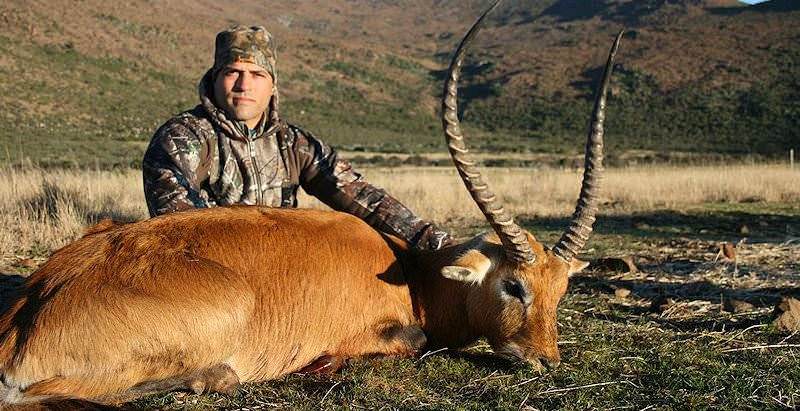


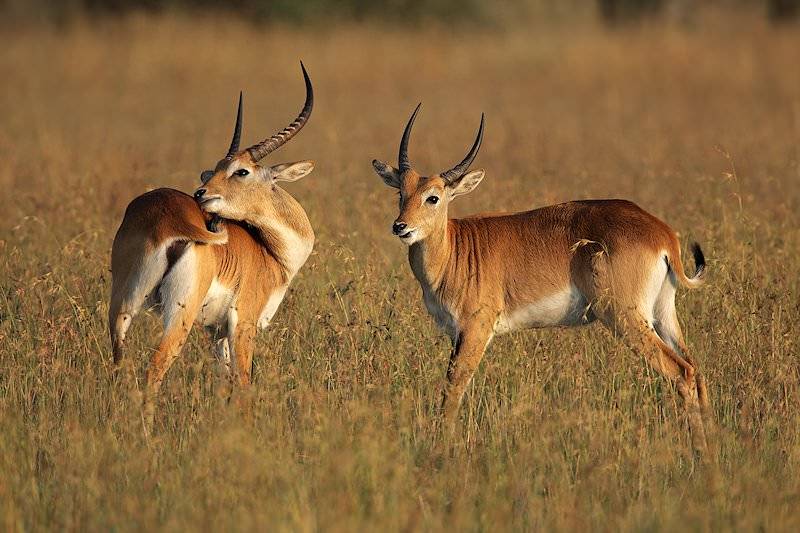
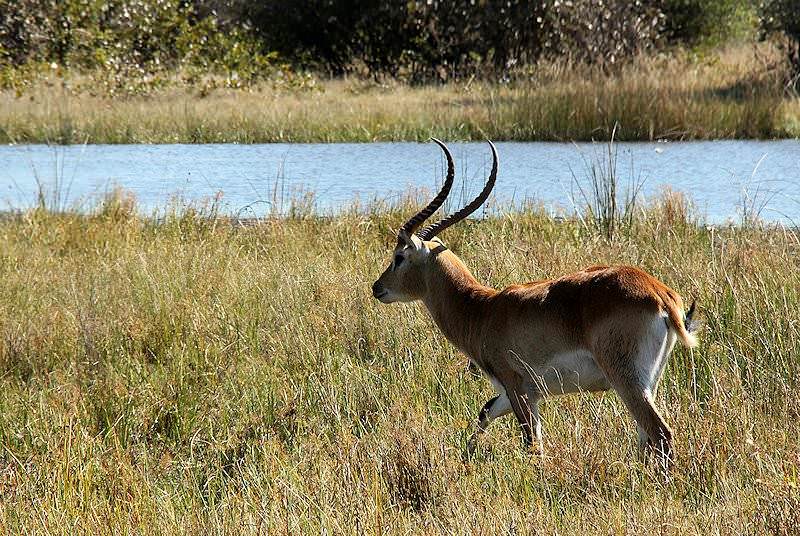
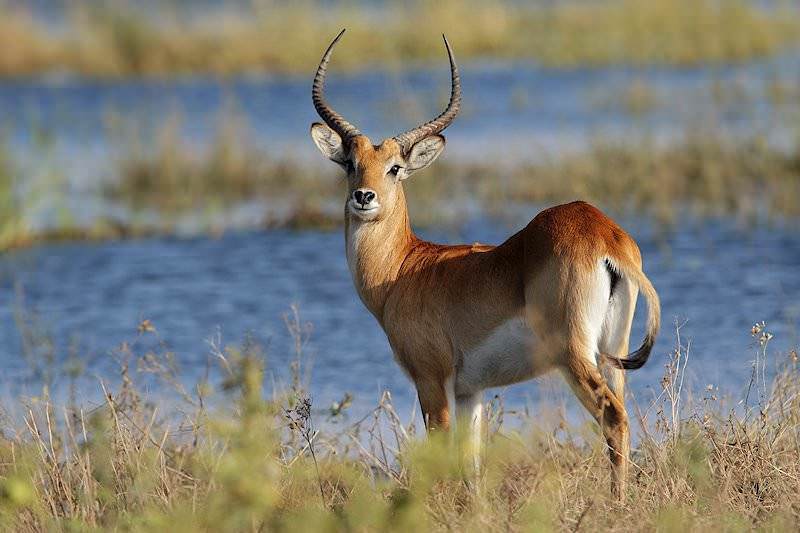
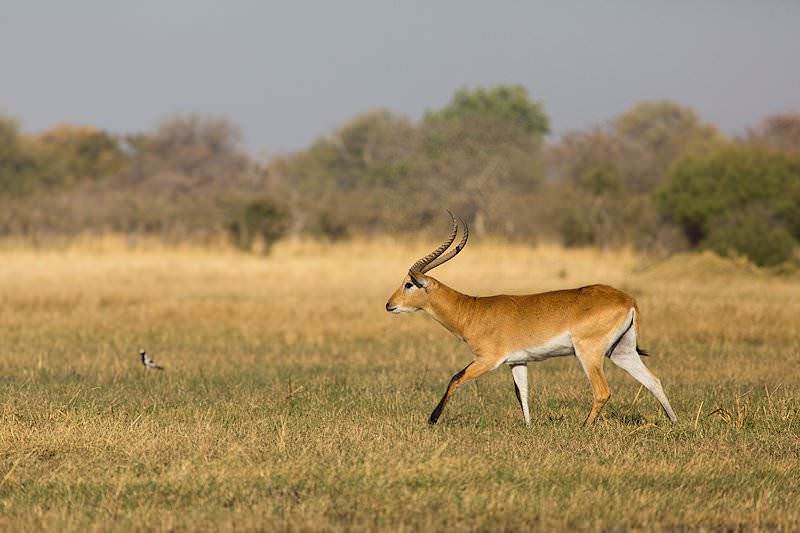
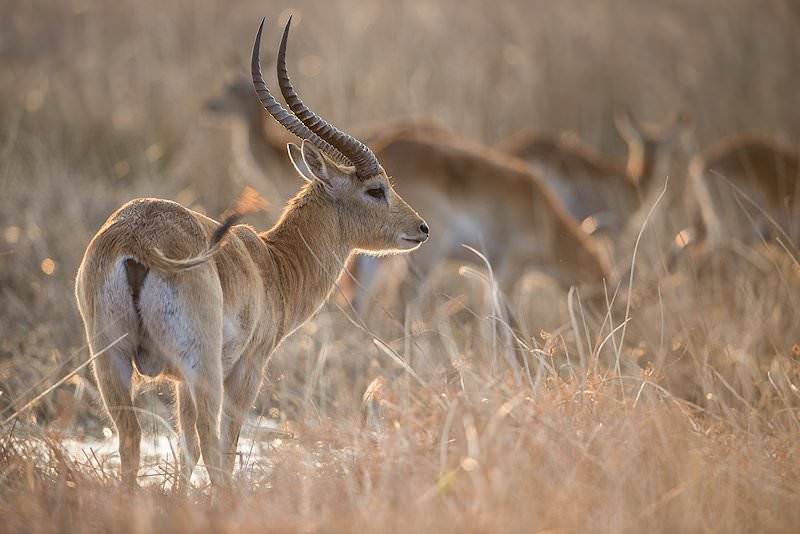
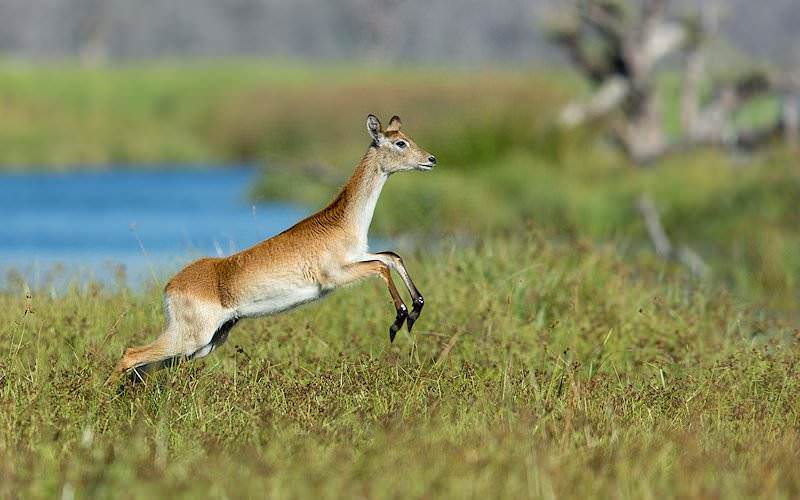
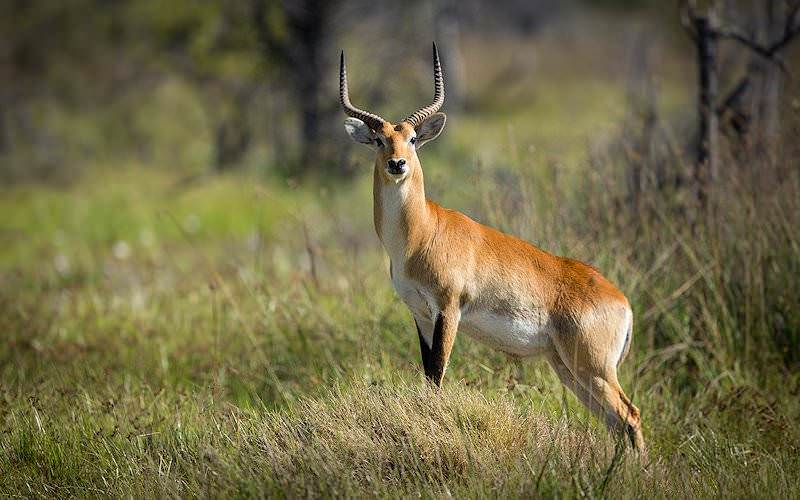
The red lechwe is a medium-sized antelope exhibiting characteristic dark markings on the forelegs. His body slants forward as his front shoulders are lower than his croup. Not to be confused with the puku, which is smaller, lacking the markings on the forelegs and more golden, this bright reddish specimen will always be found near water.
While game ranches have provided limited populations of this sought-after trophy, the sustainable herds of lechwe are found primarily in the Okavango Delta of Botswana and the Caprivi Strip of Namibia.
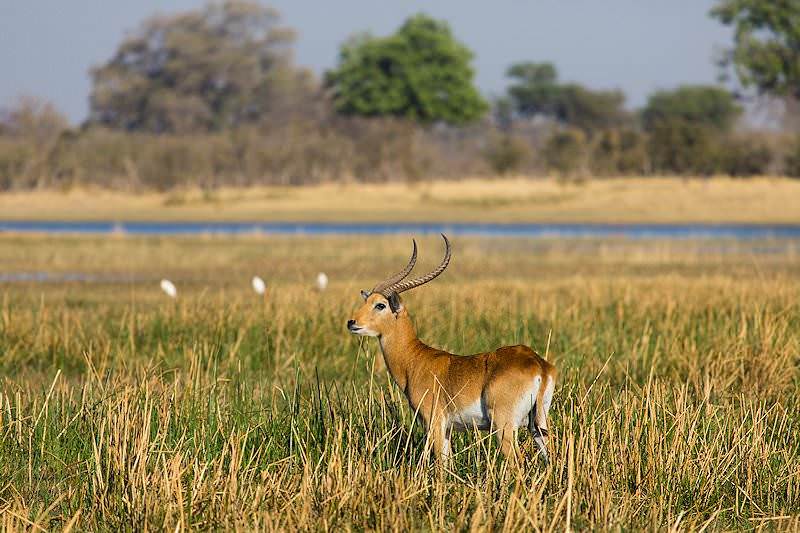
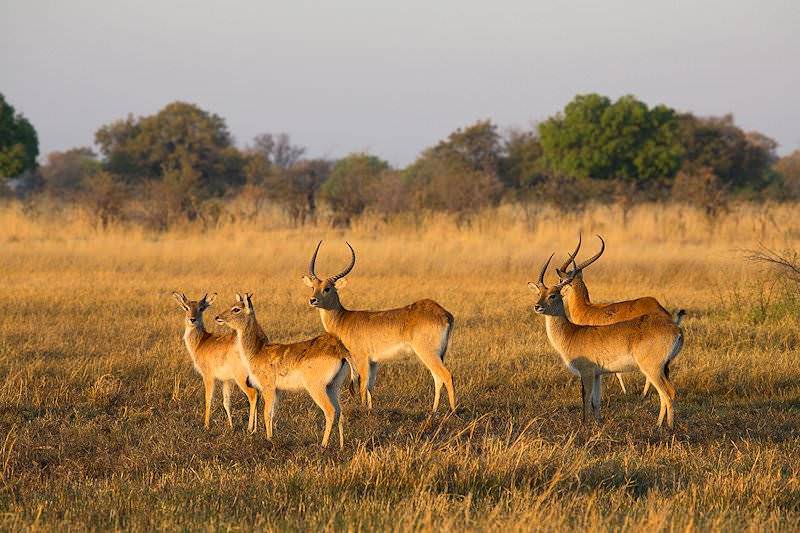
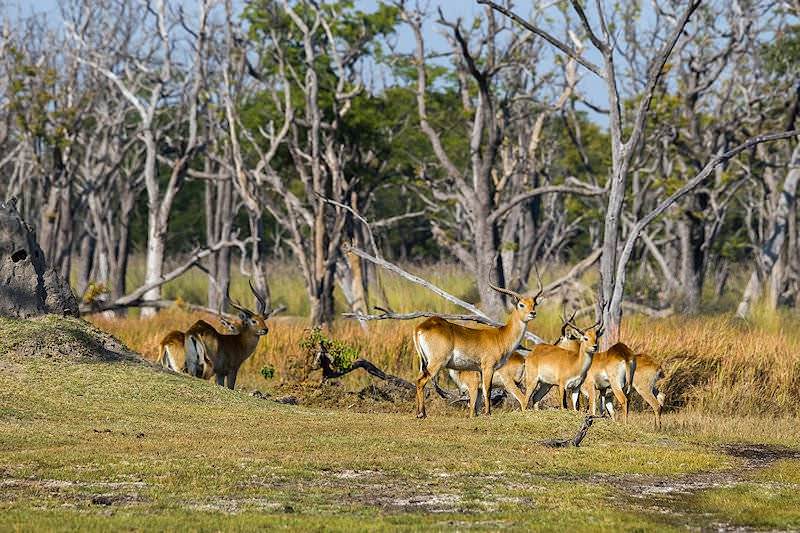
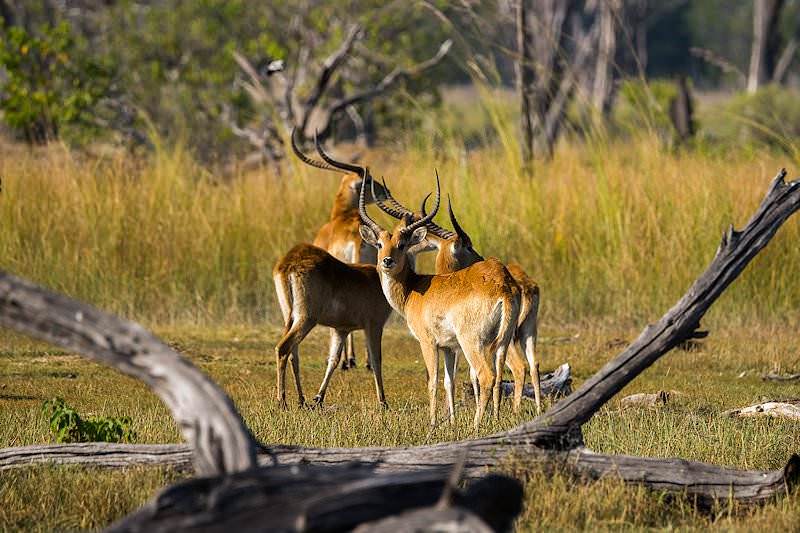
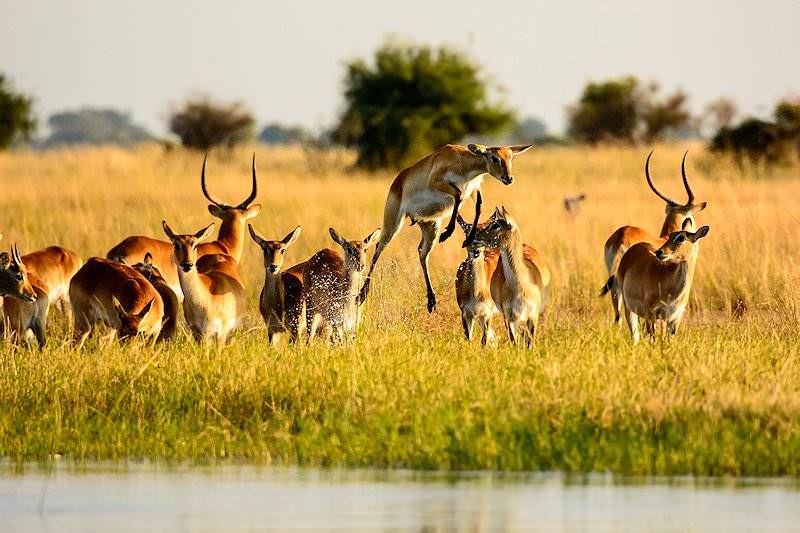
Only the ram carries horns, which sweep backward initially and then curve forward at the tips. The female of the species tends to be a bit smaller. The lechwe is at home on the shallow floodplains, along swamps and rivers in areas between the reed beds. When threatened, they flee for the water where they move with great ease. Excellent swimmers, they cannot move very fast on dry land. This aquatic antelope forms herds of 10 to 30 individuals and can be seen just about any time of day, knee-deep in the water. The lechwe feeds on water grasses and other dry grasses and drinks regularly. The herd grazes primarily during early morning and late afternoon, resting on dry land during the heat of the day.
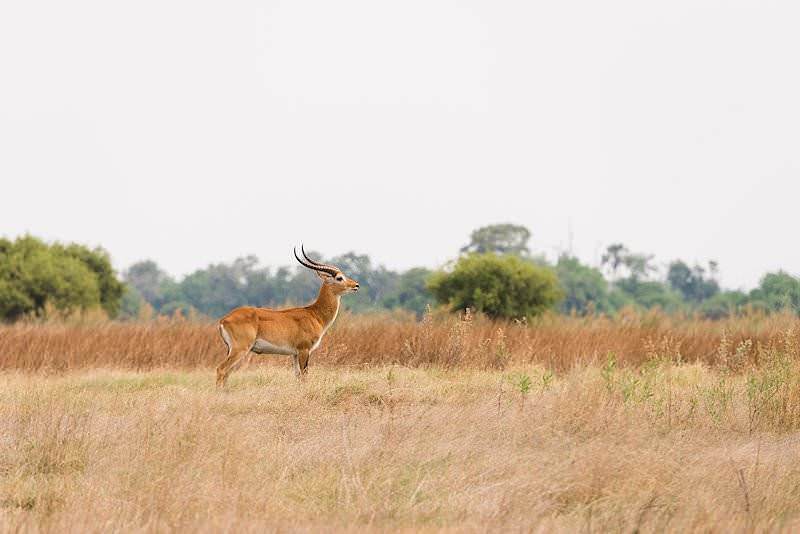
Hunting lechwe can be a real challenge, as he will tend to stand and watch his pursuer, keeping just out of reasonable range. Shots will be necessarily long, and retrieval is sure to be from the water. You can definitely expect to get your feet wet when hunting lechwe! With shots tending to be on the long side, choose a rifle that is capable of reaching out a bit. The .270 will do nicely, and the .30 caliber magnums will definitely get the job done. As always, for the medium-sized antelope, use a quality expanding bullet of 150 to 175 grains. The aim point is the standard high heart/lung shot; straight up the foreleg, one third into the body and squeeze. Your lechwe should not go far, and he should be easy to find in the water.
Our Favorite Areas in South Africa for a Red Lechwe Hunt
Red lechwe are closely tied to wetlands, floodplains, and permanent water sources, and hunting opportunities in South Africa are limited to a small number of suitable concessions and managed populations. Because they prefer reed-lined waterways and shallow marshy areas, hunters often glass open edges and approach carefully along dry ground. The regions below are examples of areas where lechwe may be available where permitted.
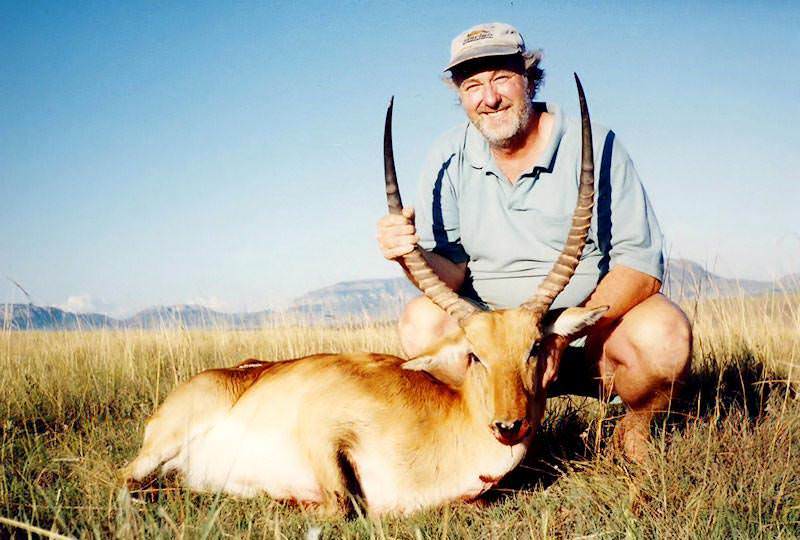
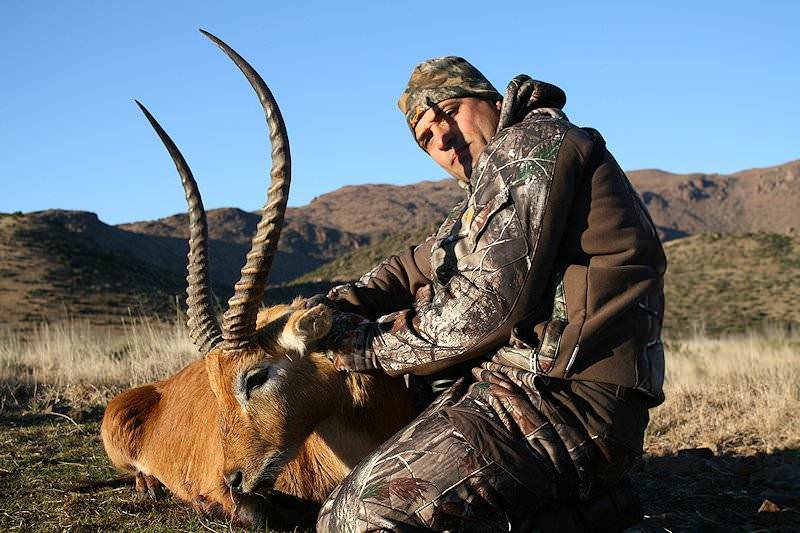
Red Lechwe Hunting Photo Gallery
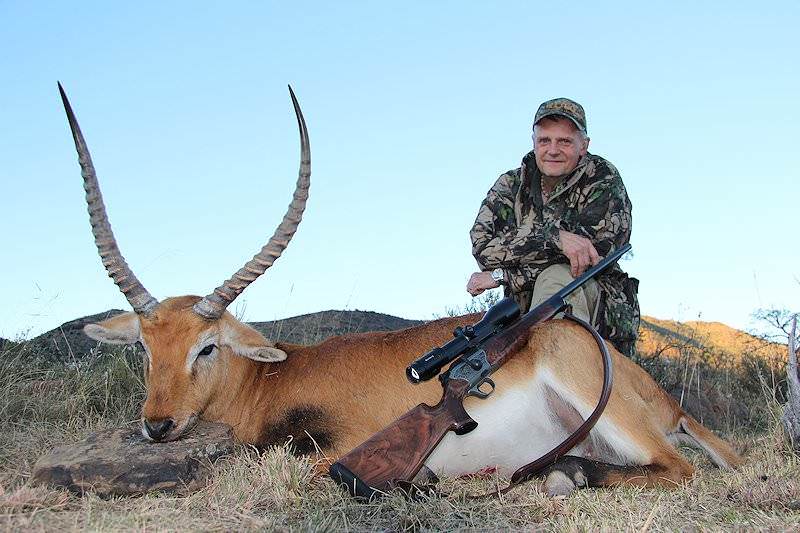
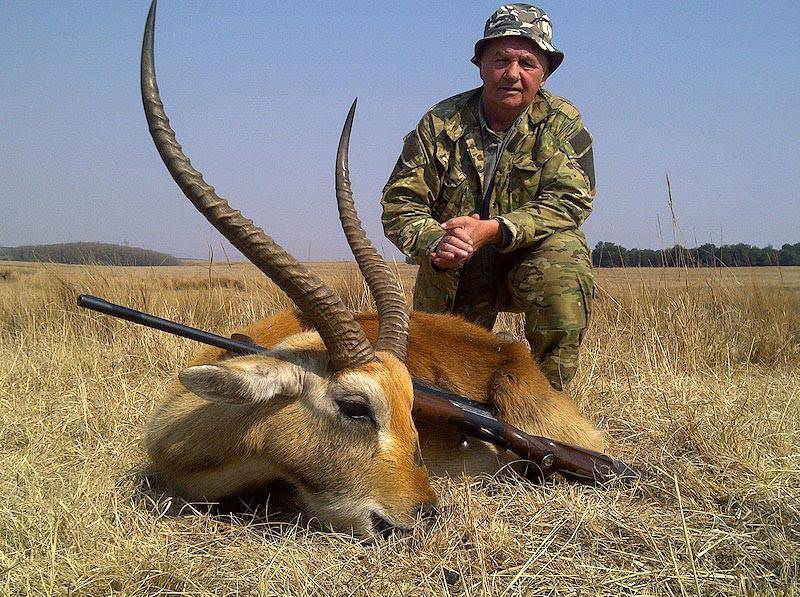
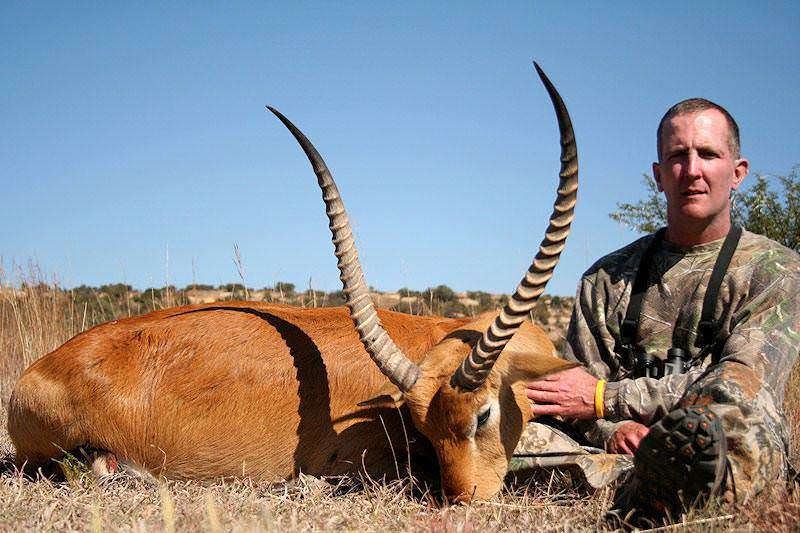
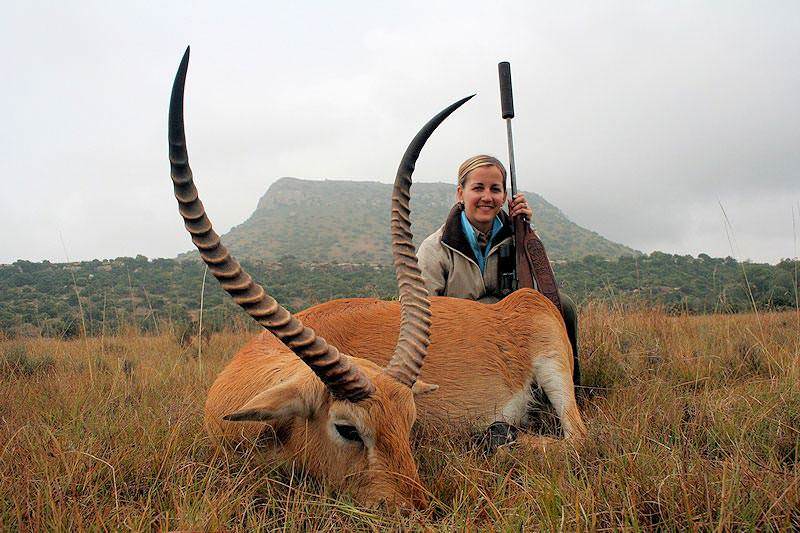
Browse photos of red lechwe taken in wetland and floodplain habitats, including trophy images and typical environments where these water-loving antelope are found. The gallery highlights their distinctive coloration, horn shape, and the reed-lined channels and open grassy flats where hunters most often spot lechwe near permanent water.