

Safari Paperwork Checklist
The essential documentation involved in your hunting safari.
Reservation Document (Outfitter Document)
Your reservation document doubles as a contractual agreement between you and AS Hunting Adventures (your hunting outfitter), requiring signatures from both parties. In addition to the contractual portion of the document, your reservation document contains the full details of your quotation (i.e. the rates of the animals you have included and the daily rates of the hunting lodge), details about specific inclusions and exclusions as well as information on taxidermy and the importation of your hunting rifles. On the very last page, you will find our terms and conditions.
Indemnity Form
Before your safari begins (or before hunting commences), you will be required to sign an indemnity/waiver form. This is a standard formality for activities in wild areas and on hunting properties. If you would like to review the indemnity wording in advance, please contact us and we will send it to you.
Passport and Travel Documents
Ensure that you travel with a valid passport and that it will remain valid for the duration of your trip. It is also recommended that you keep a printed copy of your flight itinerary, accommodation details, and any booking confirmations in your hand luggage. Having both digital and printed copies of key documents can be helpful if your phone battery runs out or if you need to provide quick proof of travel arrangements.
Travel Insurance and Medical Insurance
We strongly recommend that you arrange comprehensive travel insurance before departing for your safari. This should ideally include cover for medical emergencies, hospital treatment, emergency evacuation, trip interruption, and lost or delayed baggage. Please review your policy carefully and ensure you understand what is included, as insurance requirements and cover levels can vary widely between providers and countries.
Emergency Contact Details
Before traveling, make sure you have a list of important contact details easily accessible. This should include your emergency contacts at home, your outfitter’s contact information, and any relevant airline or travel agent details. It is also helpful to keep the address and contact details of your accommodation or meeting point in South Africa in case you need assistance while traveling.
Firearm Import Documentation (If Bringing a Rifle)
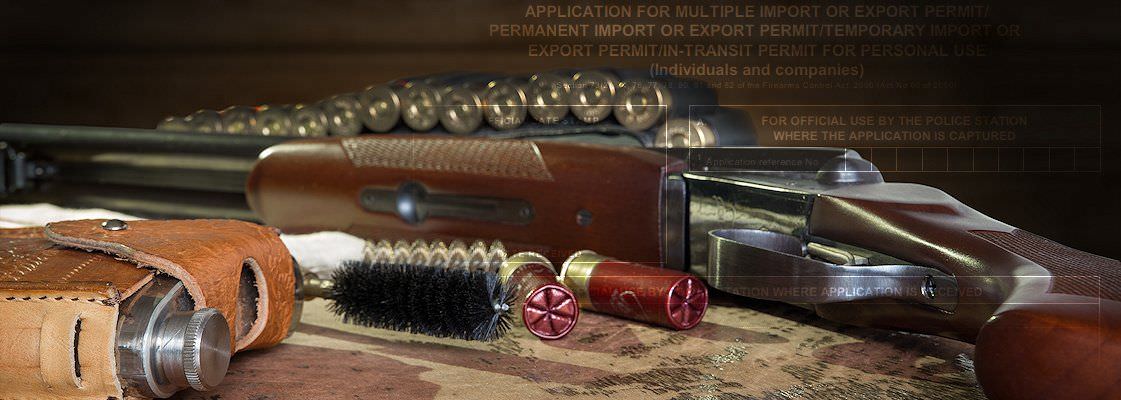
If you are traveling with a hunting rifle, you will need additional supporting documents for temporary importation into South Africa. This may include the SAPS 520 application form, proof of ownership from your country of origin, your return flight itinerary, and an invitation or confirmation letter from your outfitter. Requirements can vary depending on your nationality, flight routing, and the firearms you are importing, so please confirm your full checklist before departure.
Firearm License and Serial Number Information (If Bringing a Rifle)
If you are importing a firearm, ensure that your firearm license documentation is available and that the serial number details match exactly across all forms and paperwork. Any discrepancies in firearm details can cause delays during processing. It is recommended that you double-check your firearm make, model, caliber, and serial number against your supporting documents before traveling.
Ammunition Information (If Bringing Ammunition)
If you are traveling with ammunition, ensure that you comply with airline regulations and South African entry rules regarding quantities and packaging. Ammunition should be transported in appropriate containers and declared as required by your airline. It is recommended that you confirm ammunition allowances with your airline in advance to avoid delays or confiscation during travel.
Medical Information and Prescription Medication
If you use prescription medication, it is recommended that you travel with your prescription and keep medication in its original packaging. If you have allergies or medical conditions that could affect your safari, inform your outfitter in advance so that the camp team can be prepared. It is also a good idea to pack a basic medical kit and discuss any destination-specific medical precautions with your doctor before traveling.
Vaccination and Health Precautions
Depending on the regions you plan to visit, you may need to consider certain vaccinations or preventative medication. Malaria precautions may be recommended for some destinations in Southern Africa, particularly during certain times of the year. Always consult a qualified medical professional or travel clinic in your home country to confirm what is appropriate for your personal health and your exact itinerary.
Customs and Personal Effects Documentation
Some travelers prefer to carry documentation that helps prove ownership of valuable personal items such as cameras, binoculars, firearms, or other equipment. This can be useful when passing through customs and when returning home. If you are unsure what documentation is recommended for your country, consult your local customs authority before departure.
Payment Confirmation and Proof of Deposit
It is recommended that you keep proof of your deposit payment and any payment confirmations related to your safari booking. This can help prevent confusion on arrival and ensures that both parties have clear reference to the agreed booking details. If you have any questions regarding outstanding balances or payment timelines, please contact us prior to travel.
Taxidermy and Trophy Export Documentation (If Applicable)
If you plan to export trophies after your safari, additional documentation may be required for taxidermy, dip and pack services, and international shipping. Export requirements can vary depending on species, destination country regulations, and service providers. If you would like guidance on the trophy export process, please contact us and we will assist with the correct steps and documentation.